Blogs
Learn from others to see how Analytica has helped organizations of all shapes and sizes gain valuable insights to make more informed decisions.
Select the categories below to see industry specific examples, different tools and methodologies, gain access to open-sourced models, learn about spreadsheet conversions, integrations, modeling tips and so much more!

Standard deviation or standard error
Figuring out what people mean is important. Are they talking about standard deviation? Or about standard error? Or do they consider the two things to be equivalent?
Uncertainty analysis: are you sure about what you’re not sure about?
Tracking uncertainty in the input data in a model and showing how different degrees of such uncertainty affect the final result are strengths of Analytica. However, uncertainty ...
Sustainability analysis: see the forest & the trees
By the end of 2014, the Government of Ontario, Canada, has committed to phasing out the use of coal and phasing in renewable solutions to produce electricity.
Monte Carlo analysis for schedules: more than just a mouse click
Project managers using Analytica to model schedules benefit from the built-in Monte Carlo engine. That makes the simulation runs for a given model effortless from the ...
Why you need a decision support software
For Decision Strategies, Inc., the recommendation is clear: ‘Executives who are hesitant about using decision support systems should consider Analytica.’ Pointing executives...
Decision analytics & feedback loops: the driver & the driven
Out of descriptive, predictive and decision analytics, decision analytics are squarely in the here and now. If you look at the Lumina analogy of driving a car, you’ll see several ...
Modeling software as a service (SaaS) & accounting for profitability
What should you expect in terms of profitability when modeling software as a service? Conventional business theory says an enterprise cannot be unprofitable over too long a time...
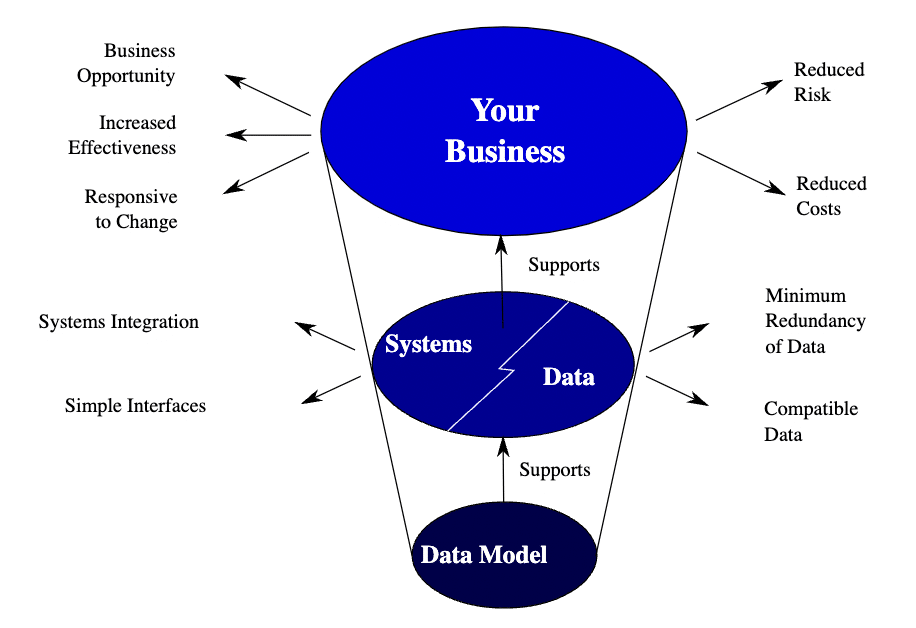
Data modeling without tears: perils & pitfalls to avoid
If a model is to yield a result, it needs data. Data are described by a data model, sometimes very simple (‘year’); sometimes more complex (energy consumption by type of energy, ...